


Phenoxyethanol
There he is, that's it, the leader of evil preservatives, the black sheep of cosmetics, who gives you cancer and sucks your soul at first sight! We know that you have heard a LOT of things about phenoxyethanol, but above all a LOT of nonsense. So we're going to take a moment to reestablish the truth, which is not that complicated.
First of all, phenoxyethanol is a very effective preservative. A conservative is GOOD! This prevents the development of bacteria, fungi and yeast in your cosmetic product. And believe us, these little creatures, even if we don't see them, can cause a lot of damage! It is very dangerous to use a product without preservatives. Furthermore, European legislation has published an exhaustive and official list of preservatives permitted in cosmetic products. So be aware that if you come across a so-called "preservative-free" product, unless it does not contain water (Aqua on the INCI list), and even then, it is simply that it is preserved, but with an unauthorized molecule, declaration of which is not obligatory. This is a common practice in natural and organic products, don't fall for it!
Now, regarding the toxic effects of phenoxyethanol, there are some, that's for sure. No, it is not completely harmless to health. But as Paracelsus, father of modern pharmacy, said, “everything is poison, nothing is poison, it is the dose that makes the poison”. An innumerable number of toxicity studies have been carried out on phenoxyethanol, which already makes it one of the safest preservatives because we know it by heart, and if something bad happens, we know exactly what to do, unlike many others in its category. These studies have shown on the one hand that the risk of skin sensitization is very low. On the other hand, potential carcinogenicity is suspected regarding the application of phenoxyethanol to the seat of children under 3 years old. On this subject, the ANSM (National Agency for the Safety of Medicines and Health Products) used the "reasonable worst case" model, basically, the "worst possible scenario", to determine the limit dose of phenoxyethanol to be used in cosmetic products. In this scenario, a toxic dose was calculated by taking as a subject (virtual of course) a premature baby weighing 3.4 kg. This dose was then divided by a safety factor, to provide a limiting dose of 1%. This means that, whatever the product, if there is phenoxyethanol, it represents MAXIMUM 1% of the formula. Then, unless you are a 3.4 kg premature baby suffering from numerous comorbidities, phenoxyethanol will not harm you.
Last point, phenoxyethanol is accused of being an endocrine disruptor. First of all, what is an endocrine disruptor? In reality, we don't really know, that's the problem. We know that these are molecules which, in small doses, are capable of generating hormonal disorders. On the other hand, we do not really know the impact this represents on health, nor the biological mechanisms involved. This is a rather recent observation, and a subject which still lacks perspective in relation to the suspected substances. And these are very numerous! Endocrine disruptors are everywhere, in food, in cosmetics, but also on your furniture and in your bed (furniture and bedding are often treated with a fire retardant product which is also full of endocrine disruptors), in the cinema, on your clothes, and so on... So it's sure, it's not great, and the industry is doing what it can to do without it and get rid of it. What is dangerous is what we call the cocktail effect, a nice term for global, permanent and additive exposure to endocrine disruptors. Each endocrine disruptor has its dose limit for use, but as they are absolutely everywhere and in all areas, ultimately, the dose to which you are exposed is significantly higher than the authorized dose per substance. And unfortunately, we have no way of measuring this exposure. It is up to us to be careful, as much as possible, about what we consume, while waiting for a better solution to be found.
Come on, a little fun fact to lighten the drama? Phenoxyethanol is also a product of nature, it is found in green tea and chicory. To meditate! ;) In the meantime, Mr. BARBIER has eliminated phenoxyethanol from all his products. It only remains in our shampoo, until we find an equally effective alternative to preserve it.


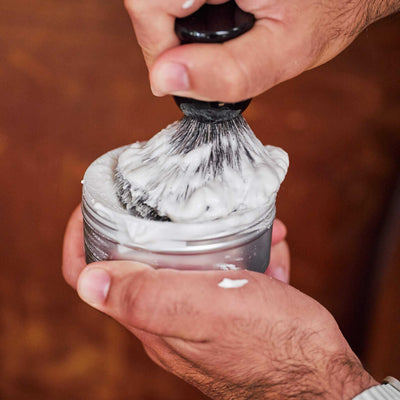

Natural? Yes. Boring? Never !

Between us gentlemen, aren't you fed up with products with synthetic odors and dubious compositions? Do you want to go back to nature, with healthy formulas that preserve your beauty capital?
We do too, which is why Monsieur BARBIER has rethought the design of products for men in order to imagine the most natural products possible, by carefully choosing each ingredient and each active ingredient, for an uncompromising balance between effectiveness, sensoriality and naturalness. Naturalness, yes, but not at the expense of style or pleasure.
In this approach, Monsieur BARBIER is one of the only brands for men to be members of COSMEBIO and subject to ECOCERT audits, for its Cosmos Nat labeled products. And all of our products are free from controversial ingredients, or ingredients of animal origin. Not even bad! Did you know that our Full Care oil was the first beard oil in the world to receive the Cosmos Nat label? In addition to being the first dry oil in its category, we will let you discover the benefits for yourselves.
