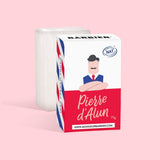
Alum stone is a natural mineral (potassium alum) that has been used for centuries by barbers as an aftershave: when rubbed damp onto the skin, it soothes razor burn, tightens the pores and helps heal micro-cuts. It is one of the simplest, most sustainable and most effective products in the entire bathroom, provided you know how to choose it and have the right answers regarding aluminium. We’ll tell you everything, straight up.
What is alum stone used for?
- After-shave : its astringent properties tighten pores and instantly soothe razor burn – the signature gesture of traditional barbers;
- Minor cuts : rubbed over a small shaving cut, it helps the skin to close up and the bleeding to stop quickly;
- Natural deodorant : applied damp to the underarms, it limits the growth of odour-causing bacteria, without fragrance or alcohol;
- Before electric shaving : it firms the skin’s texture and makes shaving easier.
How to use it (the correct technique)
It couldn’t be simpler: dampen the stone with cold water, rub it gently over the shaved areas, leave it to work for a few seconds, then rinse the stone and leave it to air-dry between uses. A very brief tightening sensation is normal: this is the astringent effect. If looked after properly, a 75 g stone will last for several years: probably the best value for money in your grooming routine. It’s a bit like Obelix’s menhir, but for the bathroom: a block of raw mineral, with no batteries or refills, that will last you longer than most of your gadgets.
A little detail for film buffs: in *Rocky*, the cutman who staunches the cuts between rounds uses a haemostatic stick… made from alum. If the mineral can stand up to Apollo Creed, your razor burn is no match for it.
As a deodorant, on the underarms
The best time to use it: straight after a shower, on clean, still-damp skin (otherwise, wet the stone). A few swipes are enough: the invisible mineral film keeps odour-causing bacteria at bay all day long, without blocking perspiration, which remains a natural process. Suitable for daily use, simply avoid days when you’re waxing.
Aluminium: the real answer, without the waffle
Natural potassium alum is not the same as the aluminium chlorohydrate found in industrial antiperspirants.
This is THE question we’re asked. Yes, potassium alum is chemically an aluminium salt, but it is not the same compound as the salts used in industrial antiperspirants (aluminium chlorohydrate). Potassium alum is a natural crystalline molecule, larger in size, known to remain on the surface of the skin rather than penetrating it.
To be honest: the available studies do not establish any proven risk from natural alum stone used externally, and it has been used for centuries. If you’re taking a strictly precautionary approach, avoid applying it immediately after hair removal or to broken skin, and always choose a natural stone (potassium alum) rather than a synthetic one (ammonium alum, which is often cheaper and not labelled). Look for ‘potassium alum’ on the label.
Natural or synthetic: how to tell them apart
A quick glance (and a look at the label) is all it takes:
| Natural (potassium alum) | Synthetic (ammonium alum) | |
|---|---|---|
| Appearance | Translucent, with fine mineral veins | Uniform, milky |
| Origin | Natural mineral | Industrial by-product |
| Label | potassium alum | ammonium alum (often unspecified) |
Our Monsieur BARBIER alum stone is 100% natural, traditionally made in France, and comes in a 75 g size that will last for years of shaving.
For the complete old-fashioned shaving routine: use the alum stone immediately after the blade, followed by our EXTRA SHAVE aftershave to moisturise and soothe the skin for the long term.
FAQ
Does the alum stone sting?
Yes, you’ll feel a slight tightening sensation for a few seconds on freshly shaven skin: this is a sign that it’s working. It passes immediately, and is in no way comparable to an alcohol-based aftershave.
How long does an alum stone last?
Several years for a 75 g block used daily, provided you rinse it and leave it to dry between uses.
Can it be used as a deodorant every day?
Yes, on healthy, unbroken skin. Apply it whilst damp; avoid using it immediately after hair removal.
Alum stone or traditional aftershave?
The two aren’t mutually exclusive: the stone works instantly (astringent, razor burn), whilst aftershave nourishes the skin over time. Barbers use both, in that order.
Can alum stone lighten the skin?
No: there is no proven lightening effect, and that’s not what it’s for. If you come across it being sold for that purpose, give it a miss: its purpose is for after-shave care and odour control, not skin colour.
Which deodorant is the safest?
The one with the shortest and most straightforward list of ingredients. Natural alum stone falls into this category: a single mineral, no fragrance, no alcohol, no aluminium chlorohydrate. It’s up to each individual to choose in full knowledge of the facts, but it’s hard to get any simpler than that.
Des conseils de barbier honnêtes, sans poudre aux yeux. Ce que la science ne prouve pas, on vous le dit aussi.
Notre démarche →